

Dynamic vs Etched Wrinkles Brisbane
Understanding why wrinkles form differently — and why treatment should reflect that.
Not all facial lines develop in the same way, and the difference matters when it comes to deciding what, if anything, is the most appropriate response.
In clinical assessment, wrinkles are broadly distinguished into two types: dynamic lines, which appear during facial expression and fade when the face returns to rest, and etched lines, which remain visible when the face is completely still. These two types reflect different underlying processes — and addressing one as though it were the other tends to produce unsatisfying results.
What are dynamic wrinkles?
Dynamic wrinkles are expression lines — the creases that form when the underlying facial muscles contract during movement. Smiling, frowning, raising the brows, squinting: each of these recruits specific muscle groups that fold the overlying skin.
When skin is younger and more resilient, it recovers fully once the expression passes. Dynamic lines are a normal feature of a naturally expressive face. They are not inherently a problem — and treating them as such, without understanding whether they have become established, is one of the more common sources of over-treatment.
What are etched wrinkles?
Etched wrinkles — also referred to as static lines — are lines that remain visible when the face is fully at rest. They represent a structural change in the skin rather than a temporary fold.
Over time, the repeated movement that creates dynamic lines begins to leave a permanent impression. This is compounded by the gradual decline in collagen and elastin that accompanies ageing, and by cumulative sun exposure, which accelerates the breakdown of the skin’s structural proteins. The result is a line that no longer disappears when the face relaxes — one that has become part of the skin’s surface rather than a temporary response to movement.
A useful way to think about this: a piece of paper that has been folded and unfolded many times eventually retains the crease even when laid flat. The skin follows a similar process.
Why the distinction matters for treatment
The distinction between dynamic and etched lines is clinically significant because the two require different approaches — and applying the wrong approach to either tends to fall short.
Managing the muscle movement that creates a dynamic line will not improve an etched line, because the etching has already occurred at the skin surface level regardless of the movement. Conversely, resurfacing the skin to address an etched line will not meaningfully change a line that is primarily driven by ongoing muscle activity.
Many patients present with both — lines that began as expression lines and have gradually become established at rest. In these cases, understanding which component is dominant guides what is most likely to be useful.
Where this difference commonly shows up
The forehead and brow
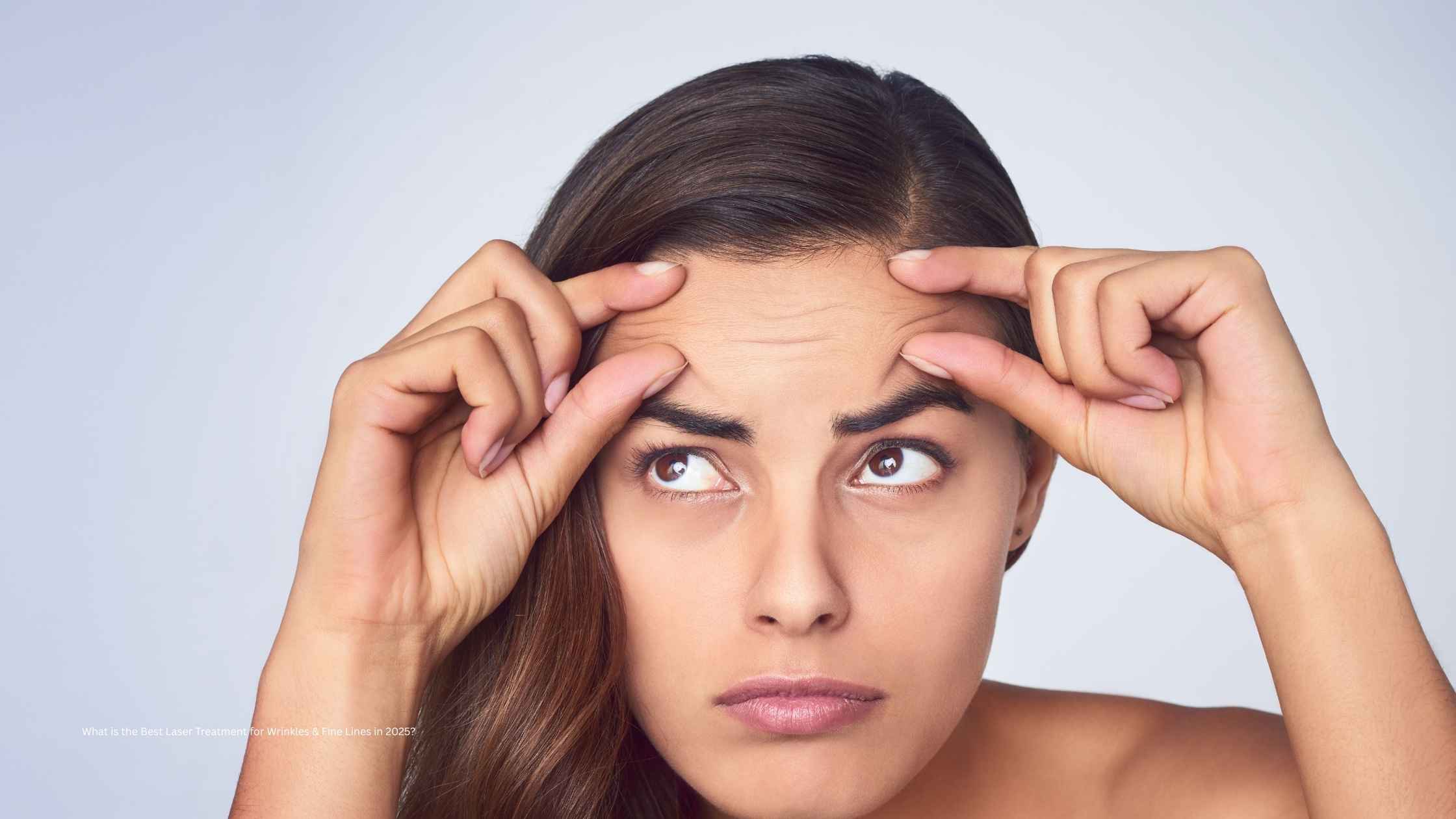
Horizontal lines across the forehead and vertical lines between the brows are among the earliest to form as dynamic lines, and among the first to become etched over time. Assessing how visible they are at rest versus in motion tells a good deal about what is driving them.
The eye area
The skin around the eyes is thin and moves frequently. Fine lines here often begin as dynamic lines during smiling or squinting and gradually become more established — particularly where sun exposure has also played a role.
The cheeks and midface
Lines across the cheeks tend to be more structural in nature — reflecting textural ageing, sun damage, and early changes in skin support rather than primarily muscle-driven movement.
The lower face and mouth
Vertical lines around the lips are typically etched rather than dynamic — driven by collagen loss, cumulative sun exposure, and the compounding effect of years of repeated movement. Where these lines are accompanied by softening of the jawline or early heaviness through the lower face, some of what appears to be surface wrinkling may reflect facial sagging rather than skin surface change alone.
Why treatment approaches differ
Because the underlying processes are different, the most appropriate approach differs accordingly.
For etched lines — skin quality and structural renewal
Where lines are visible at rest, the goal is to support collagen remodelling and surface renewal at the level where the change has occurred.
MOXI® may be relevant for earlier, more superficial etched lines and for patients who want to address skin quality and early textural change with limited downtime.
HALO® hybrid fractional laser may be considered for more established textural change and deeper etched lines — addressing both surface renewal and deeper collagen remodelling in the same session.
ProFractional™ may be discussed where more targeted, focused resurfacing is appropriate for specific established lines or textural irregularity.
BBL HEROic® is primarily used for pigmentation and vascular concerns, but may support overall skin quality and resilience as part of a broader treatment plan where colour change accompanies textural ageing.
For dynamic lines — managing the movement that drives them
Where lines are primarily dynamic — appearing with expression and less visible at rest — the more relevant approach addresses the muscle activity that creates them. In Australia, the treatments used for this purpose are prescription-only and can only be discussed and recommended following a medical consultation with a registered practitioner. The aim is always to soften the line while preserving natural expression — not to prevent movement altogether.
How wrinkles are assessed at Eleventh Heaven
During a consultation at Eleventh Heaven, Dr Ricky Sia evaluates the face both in motion and at rest. This allows a clearer picture of which lines are primarily dynamic, which have become established, and which reflect deeper structural change rather than surface skin change alone.
The assessment informs which approach — or combination of approaches — is most relevant for the individual concern, skin type, and goals. Where a line is unlikely to respond meaningfully to a particular treatment, that will be part of the conversation.
For patients wanting to explore treatment options for fine lines and wrinkles more broadly, the Fine Lines and Wrinkles page outlines the full range of pathways available at Eleventh Heaven.
Treatment planning is overseen by Dr Ricky Sia (MED0001887205) within a consultation-first framework.
Frequently Asked Questions
What is a dynamic wrinkle?
A dynamic wrinkle is an expression line that appears when the facial muscles contract — during smiling, frowning, or squinting — and fades when the face returns to rest.
What is an etched or static wrinkle?
An etched wrinkle is a line that remains visible when the face is completely at rest. It reflects structural change in the skin rather than a temporary response to movement.
Do dynamic wrinkles become etched wrinkles over time?
Yes, commonly. Repeated folding of the skin gradually creates a permanent impression — particularly as collagen and elastin decline and the skin becomes less able to recover fully between movements.
Can lasers treat dynamic wrinkles?
Lasers address the skin itself — its texture, surface quality, and collagen structure. They are more relevant for etched lines than for purely dynamic lines, where the fold is driven by muscle movement rather than permanent surface change.
At what age do dynamic lines typically become etched?
This varies considerably depending on genetics, skin type, sun exposure history, and lifestyle. Many patients begin to notice early etching of previously dynamic lines in their late twenties to mid-thirties, though the timeline is highly individual.
Can etched wrinkles be completely removed?
Deep, established etched lines can be meaningfully softened and refined, but complete removal is not a realistic expectation. The aim is progressive improvement in the visibility and texture of the line — not erasure.
How are lines around the mouth treated?
Etched lines around the mouth typically reflect collagen loss and structural skin change accumulated over time. Depending on the depth and nature of the lines, resurfacing treatments such as HALO® or ProFractional™ may be relevant. The specific approach is assessed during consultation.
Is skincare enough to address etched wrinkles?
Medical-grade skincare plays an important role in slowing further change and maintaining skin health. It is less effective at reversing established structural damage. Where etched lines are the primary concern, clinical treatment is generally required for noticeable improvement.
Will treating dynamic wrinkles make my face look frozen?
The aim is always to soften visible lines while preserving natural expression. Treatments for dynamic lines at Eleventh Heaven are planned to reduce the severity of the fold without affecting the patient’s ability to express naturally.
How do I know which type of wrinkles I have?
A clinical assessment is the most reliable way to understand what is driving visible lines — whether that is muscle movement, structural skin change, or a combination of both. During consultation, the face is assessed both in motion and at rest to inform what is most appropriate.
Find out more
If you would like to understand which approach may be most relevant for your specific concerns, we invite you to explore our Fine Lines and Wrinkles treatment page — or arrange a private consultation at Eleventh Heaven in Teneriffe, Brisbane.